RABBISHLOMO.COM
  • Home
  • Watch & Learn
  • Speaking
  • Coaching
  • Podcast
  • Bio
  • Contact
    • The Lev Experience

The Mystery of Matzah

3/24/2015

1 Comment

 
Picture
It's Matzah season! All across the globe, supermarket shelves are being stacked with boxes of wholesome matzah and pious Jews are rolling up their shirt sleeves, whipping out their rolling pins and firing up their stone ovens in preparation for another transcendental Passover.
 
Now let's not be fooled by the simplicity of its ingredients. Matzah is perhaps the most spiritually complex food in the Jewish traditional cookbook. Hidden in this seemingly flat and unassuming cracker lies an incredible depth that captures the essence of the Exodus and the lessons of the holiday of Passover.
 
Let's begin by trying to understand why we have a commandment to eat matzah on Passover. From a very young age we are taught that we eat matzah because the Jewish people didn't have time to let their dough rise before they were rushed out of Egypt by a frantic Pharaoh fearing that his demise was imminent. In that sense, matzah is a declaration of our freedom, a memento to the feeling of liberation we experienced that night, now preserved for all of history.
 
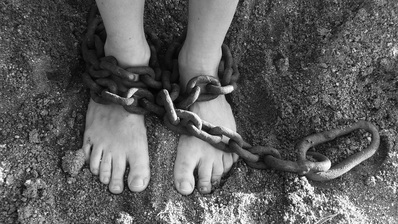
But as we look deeper, things get a bit puzzling. The author of the Haggadah opens up the Seder with the declaration that matzah "is the bread of poverty that our fathers ate in the land of Egypt." The commentaries teach us that the Egyptians fed matzah to their Jewish slaves because it is "poor man's bread" that sits in the stomach for a long time so it wouldn't be necessary to feed them as often. The author of the Haggadah seems to be telling us that matzah isn't a symbol of freedom at all, rather a symbol of poverty and slavery.
 
To make matters even more puzzling, the Jewish people were originally commanded to eat matzah at that very first Seder, which we celebrated while still in Egypt as the cries of the Egyptians mourning their first born were emanating from every home. Clearly, if they were already eating it before they were rushed out, the matzah must be more than a reminder of the scene leaving Egypt! So is matzah the "bread of freedom" or the "bread of slavery?"

Several years ago, a film called "Slumdog Millionaire" inspired viewers around the world. It was the story of a young man from India whose childhood was filled with poverty, abuse, lost love and many life-threatening experiences. One day the man's luck changes and he finds himself a contestant on "Who Wants to be a Millionaire?" As he is challenged by one difficult question after the next, he reflects back on the many negative experiences of his life, each one providing another answer that would lead him to winning it big! The very negativity that plagued him his whole life became the key to his salvation.
 
Matzah is not simply a symbol of our slavery or a symbol of freedom. It teaches us a much deeper lesson. As we discuss the slavery in Egypt and the miracles of the Exodus, the question begs to be answered: Why did we need to go through it all in the first place? Why did an innocent Jewish nation need to be subjected to such torture? Couldn't the Almighty have nurtured us while we were safely tucked away in a quiet little shtetl (village) until we were ready and then give us the Torah without all the complication?
 
Obviously not! The Jewish people needed to develop the following 3 character traits in order to become a nation that would soon hear the word of God, receive the Torah and become a light to the other nations.
​
1)      Humility- when we go through difficult times, we come to realize that without the help of others, the individual is just not all that great. We see how we need to be part of something bigger than ourselves. In Jewish tradition, the most powerful prayers come from a person in despair, because that person can truly open up their heart to the Almighty and say “I need you”. This was a necessary level for the Jewish people to reach in order to fully let God in.  

2)      Perseverance- becoming the Jewish people would be no piece of cake. Becoming the Jewish people meant embracing a future that would provide no shortage of trials and tribulations. Persecutions, pogroms, inquisitions, holocausts and terror would be a recurring a theme in the future of this nation and they had to have the power to persevere as part of their DNA. Only a rough beginning could prepare them for that.

3)      Identity- In Egypt, despite falling to the lowest depths of impurity, the Jewish people remained strong in their identity. They had no Mitzvot but they had their style of dress, their language and their names. And most of all, they kept their family unit strong. The power to remain true to our identity even though we did not have the freedom to perform Mitzvos was, again, a trait that would be crucial to our survival as a nation throughout history. When there is nothing left to hold on to, we know we are still the Jewish people.   

On Pesach, it is the matzah that takes center stage because matzah is the “bread of slavery” and represents the character traits that we developed as slaves in Egypt.  But when the Almighty summoned us to leave Egypt, He set us up to be carrying with us the very food that we were eating that entire time when we were slaves. It was His way of letting us know that freedom doesn't mean forgetting where we came from. Those very important traits of humility, perseverance and identity must accompany us into our new lives as a free nation, a holy nation and a nation of millionaires receiving the most precious gift in the world, the Torah.
1 Comment
Rina link
5/3/2016 02:34:32 am

Seder passover

Reply


Leave a Reply.

Proudly powered by Weebly
  • Home
  • Watch & Learn
  • Speaking
  • Coaching
  • Podcast
  • Bio
  • Contact
    • The Lev Experience